
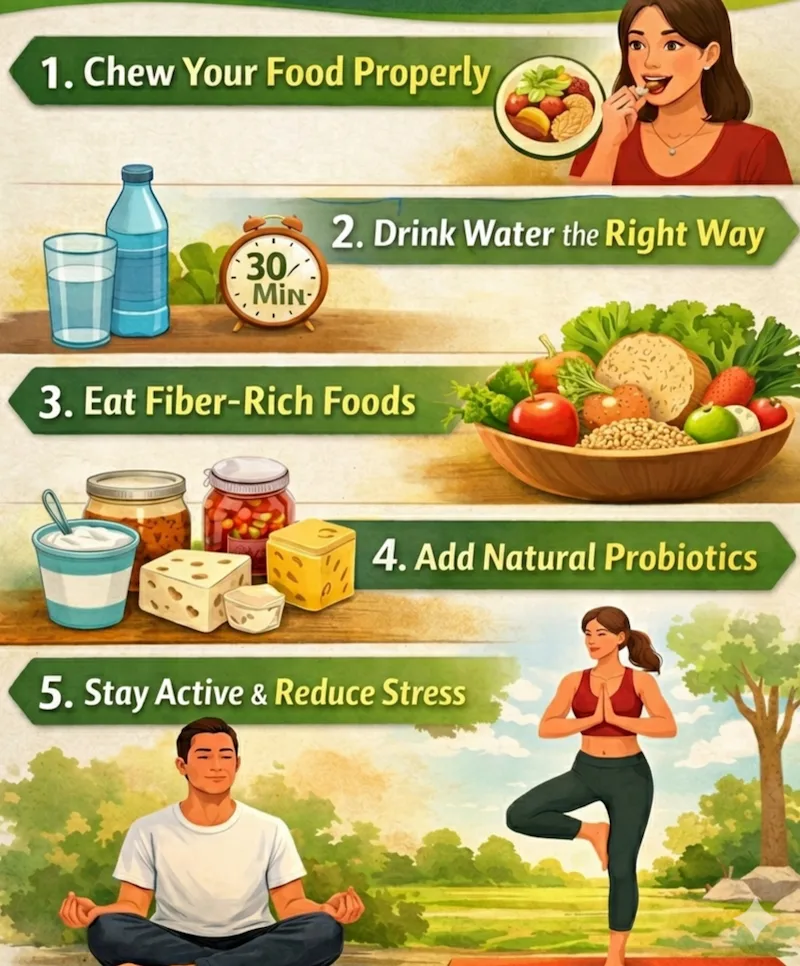
5 Easy Ways to Improve Digestion Naturally
Introduction
Good digestion is the basis of overall health and well-being. When your digestive system works smoothly, you feel lighter, more energetic, and more focused throughout the day. However, modern lifestyle habits like fast food, stress, irregular meals, and lack of physical activity can easily disturb digestion , making it essential to learn how to improve digestion naturally. This often leads to problems such as gas, bloating, constipation, acidity, and heaviness after meals.
If you often feel bloated, sluggish, or uncomfortable after meals, finding simple lifestyle changes to improve digestion naturally can make a huge difference in how you feel every day.
In this article, you will discover 5 easy, natural ways to improve digestion naturally that are practical, safe, and suitable for daily life.
What Is Digestion, and Why Does It Matter?
Digestion is the procedure through which your body breaks down food into smaller molecules like vitamins, minerals, fats, carbohydrates, and proteins. These nutrients are then engrossed and used for energy, growth, and repair. While digestion is weak or slow, the body struggles to receive nutrients accurately, and undigested food can cause distress.
Key Benefits of Healthy Digestion
| Benefit | How It Helps You |
|---|---|
| More Energy | Better nutrient absorption, less fatigue |
| Better Weight Management | Improved metabolism and appetite control |
| Clearer Skin | Fewer toxins, reduced acne |
| Stronger Immunity | A healthy gut supports immune system |
| Improved Mood & Focus | Better gut-brain connection |
A healthy digestive system does not require complicated diets or extreme measures; simple, consistent habits can make a big difference.
1. Chew Your Food Properly
Although many people think digestion begins in the stomach, it actually starts in the mouth. Chewing your food properly is one of the simplest and most powerful steps you can take to improve digestion naturally.
Why Chewing Matters
- Chewing chops up food into small chunks so that the stomach can digest it quicker.
- The mouth’s saliva is also populated with enzymes that begin to digest carbohydrates.
- Chewing properly helps to reduce gas, bloating, and heaviness following meals.
Simple Chewing Habits to Improve Digestion
| Habit | Practical Tip |
|---|---|
| Chew slowly | 20–30 chews per bite |
| Avoid rushing meals | Spend at least 15–20 minutes |
| No multitasking | Avoid TV or mobile while eating |
| Smaller bites | Easier to digest |
When you chew food thoroughly, you also become more mindful of what and how much you are eating, which further supports a healthy digestive system and weight control.
2. Drink Enough Water—the Right Way
Water is essential for digestion, but how and when you drink it also matters. Many digestive issues, such as constipation, hard stool, and sluggish bowel movements, are caused by low water intake.
Staying hydrated by drinking enough water throughout the day helps break down food efficiently and is essential if you want to improve digestion naturally without relying on supplements.
Role of Water in Digestion
- Helps soften food and move it smoothly through the digestive tract.
- Prevents constipation by keeping the stool soft and easy to pass.
- Supports nutrient absorption and overall metabolism. Proper hydration is the foundation of a smooth digestive process. According to clinical insights from Harvard Health Publishing, adequate water intake is essential for the breakdown of food and ensuring that nutrients are efficiently absorbed while preventing chronic constipation.
Best Practices for Drinking Water
| Tip | Explanation |
|---|---|
| Sip water all day | Avoid drinking too much at once |
| Limit water during meals | Keep 30-minute gap before/after meals |
| Warm or room-temperature | Cold water may slow digestion |
| 6–8 glasses daily | Adjust as per activity and climate |
You can also start your day with a glass of lukewarm water, which may help stimulate bowel movements and support detoxification in a gentle way.
3. Add Fiber-Rich Foods to Your Diet Improve Digestion Naturally
Dietary fiber is also one of the most important components of a digestively efficient diet. It acts as a ‘broom’ for your intestines, letting you dispose of waste and keeping you moving your bowels on time.
Adding diverse fiber sources to your daily meals acts as a natural regulator for the gut. Experts at the Mayo Clinic point out that a high-fiber diet not only normalizes bowel movements but also maintains overall bowel health and integrity over time.
Types of Fiber and Their Roles
| Type of Fiber | Function | Food Sources |
|---|---|---|
| Soluble Fiber | Slows digestion, controls blood sugar | Oats, apples, flaxseeds |
| Insoluble Fiber | Adds bulk, prevents constipation | Whole grains, vegetables |
A low-fiber diet, often full of processed and refined foods, is a common reason for constipation and digestive discomfort.
Eating fiber-rich foods like whole grains, vegetables, and fruits is one of the most effective ways to improve digestion naturally and keep your gut healthy.
How to Increase Fiber Intake Naturally
- Change bread to whole grain or multigrain.
- Serve a bowl of salad or vegetables with at least one or two meals per day.
- Don’t gobble up chips and sweets! Snack on fruits, nuts, and seeds instead.
- Choose whole grains like brown rice, oats, barley, or quinoa.
Increase fiber slowly and drink sufficient water. Adding too much fiber too fast without sufficient water can cause gas or distress.
The Gut-Brain Axis: Beyond Just Eating
Digestion is not just about what you eat; it’s about how your nervous system communicates with your gut. This is known as the “gut-brain axis.”
- The Role of the Vagus Nerve: When you eat while stressed, your body enters ‘fight or flight’ mode, shutting down optimal digestion. Practicing 2 minutes of deep breathing before a meal activates the vagus nerve, switching your body to ‘rest and digest’ mode.
- Enzymatic Window: Research shows that our digestive enzymes are most active during daylight hours. Following a “circadian eating” pattern—where you eat your largest meal when the sun is highest—can improve nutrient absorption by up to 30%.
4. Use Natural Probiotics and Fermented Foods
Your gut is home to millions of “good bacteria” that help break down food, produce certain vitamins, and cover against dangerous microbes. This is known as the gut microbiome. When this balance is disturbed, it can lead to gas, bloating, indigestion, and a weaker, more vulnerable system.
Probiotics are salutary bacteria that support a healthy gut terrain. Incorporating these beneficial bacteria into your daily routine is one of the most effective ways to improve digestion naturally.
The balance of your gut microbiome plays a massive role in how well you digest food. Scientific research hosted by the National Center for Biotechnology Information (NCBI) demonstrates that regular consumption of probiotics significantly improves gut transit time, balances intestinal flora, and helps alleviate common issues like bloating.
Natural Probiotic-Rich Foods
| Food | Digestive Benefits |
|---|---|
| Plain Yogurt | Good bacteria support lactose digestion |
| Buttermilk / Lassi | Light and gut-friendly |
| Kefir | Rich in probiotics |
| Fermented Pickles | Supports gut microbiome |
| Idli / Dosa | Easier-to-digest fermented foods |
How to Include Probiotics in Your Routine
- Add a small bowl of plain yogurt to your lunch or dinner.
- Select unsweetened or low-sugar options to avoid excess sugar.
- If you are lactose intolerant or have specific digestive issues, consult a doctor about probiotic supplements.
Probiotics can nourish not only digestion but also immunity and mood due to the strong connection between the gut and the brain.
5. Stay Active and Manage Stress
Two major enemies of digestion in today’s lifestyle are sitting for long hours and chronic stress. Both affect how quickly and effectively your digestive system works.
How Physical Activity Supports Digestion
- Gentle motion stimulates periodic contractions that move food around the digestive tract.
- It improves circulation of blood to the digestive organs.
- It reduces the chance of constipation and bloating.
Simple Daily Activities for Better Digestion
| Activity | Duration |
|---|---|
| Brisk walking | 20–30 minutes daily |
| Light stretching | 5–10 minutes |
| Using stairs | Whenever possible |
| Post-meal walk | 5–10 minutes |
The Impact of Stress on Digestion
The gut and brain are inextricably linked. When you’re stressed, your body can produce more acid, reduce digestion, or cause cramping, nausea, or diarrhea.
Stress management tips for better digestion:
- Practice deep breathing or simple meditation for 5–10 minutes daily.
- Reduce screen time, especially late at night, to improve sleep quality.
- Prioritize 7–8 hours of sleep, as poor sleep can degrade digestive problems.
Managing stress doesn’t mean removing all problems from life, but it does mean improving how your mind and body handle them.
Sample One-Day Digestion-Friendly Meal Plan
Below is a simple illustration of a daily meal plan that helps digestion. You can adapt it to your requirements and tastes.
| Time | Meal |
|---|---|
| Early Morning | Lukewarm water + soaked almonds |
| Breakfast | Oatmeal, fruit, flaxseeds, yogurt |
| Lunch | Lentils, brown rice, salad, yogurt |
| Dinner | Light vegetable meal |
Following such a pattern, along with the five key habits described above, can significantly improve your digestion over time.
Common Digestion Mistakes to Avoid
| Mistake | Negative Effect |
|---|---|
| Eating too fast | Gas and bloating |
| Late heavy dinners | Acidity and poor sleep |
| Low water intake | Constipation |
| Excess junk food | Poor digestion |
Avoiding these mistakes while adopting simple natural habits gives your digestive system the chance to function at its best.
Many health experts recommend balanced diet recommendations to keep the digestive system functioning properly.
Natural Digestion Booster Checklist (Actionable Steps)
To optimize your digestive health daily, follow this professional routine:
- The 32-Chew Rule: Aim to chew each mouthful 32 times. This breaks down food into a liquid state, reducing the workload on your stomach.
- Post-Meal Movement: A 10-minute gentle walk after lunch or dinner helps stimulate peristalsis (the movement of food through the digestive tract).
- Probiotic Timing: Consume fermented foods like yogurt or kefir during breakfast for maximum gut flora colonization.
- The Hydration Gap: Avoid drinking large amounts of ice-cold water during meals, as it can dilute digestive juices. Drink 30 minutes before or after instead.
Adopting these natural habits creates a holistic approach to wellness. As emphasized by the National Institutes of Health (NIH), supporting your digestive tract through mindful eating, proper hydration, and physical activity ensures that your entire gastrointestinal system functions at its optimal capacity.
Take the first step toward a healthier gut today!
Download the full Natural Digestion Checklist and start your journey to better health.
💡 My Personal Experience
“I used to feel very heavy and tired after eating. Then I started chewing my food 32 times and stopped using my phone during meals. In just 7 days, my bloating was gone, and I felt much more energetic. This small change really works!”
Conclusion
Digestive health is not a matter of complex diet or strict lifestyle changes. Five simple habits, namely eating right, drinking the right amount of water, eating fiber-rich foods, taking natural probiotics, and resting while you work to combat stress, will support your digestive system in a powerful and sustainable way.
These changes are gentle, practical, and applicable to the everyday, making them ideal for long-term digestive health. If you feel severe pain, bleeding, sudden weight loss, or a persistent digestive problem, consult a doctor. These natural remedies are actually an effective starting point for mild gas, bloating, heaviness, or irregular constipation.
Ultimately, taking small daily steps—like eating mindfully, staying active, and drinking enough water—will help you improve digestion naturally and enjoy a healthier, more energetic life.
By adopting these small lifestyle shifts—such as mindful chewing, proper hydration, and eating fiber-rich foods—you can easily improve digestion naturally and enjoy a healthier, more energetic life.
FAQs:
1. How long does it take to see improvement in digestion with natural methods?
For many people, simple changes like better chewing, increased fiber, and more water can bring noticeable improvement within 1–3 weeks, especially if done consistently. However, chronic or severe issues may take longer and may require medical guidance.
2. Is warm water really better for digestion than cold water?
Lukewarm or room-temperature water can be gentler on the digestive system and may help food move more smoothly through the intestines. Very cold water can occasionally slow down digestion or cause discomfort in sensitive individuals, particularly when consumed with meals.
3. Can I eat yogurt every day for better digestion?
Yes, most people can safely eat plain yogurt every day, as it offers natural probiotics that support gut health. If you are lactose intolerant or have allergies, select lactose-free options or talk to your doctor about probiotic supplements.
4. Are home remedies enough to treat all digestive problems?
Home remedies and lifestyle changes can efficiently manage mild digestive problems such as gas, bloating, heaviness, and occasional constipation. But, if you experience severe pain, vomiting, blood in stool, long-term constipation or diarrhea, or unexplained weight loss, you should seek medical care immediately.
5. How important is exercise for digestion?
Regular physical activity is very significant for healthy digestion. Even 20–30 minutes of walking most days of the week can increase intestinal movement, reduce constipation, support weight management, and lower stress levels; all of these help your digestive system work better.
Q: What foods should I avoid if I want to improve digestion naturally?
Processed foods, excessive sugar, artificial sweeteners, and very greasy or fried meals can slow down your gut and cause bloating, so it’s best to limit them.
Medical Disclaimer & Professional Note
Daily Best Knowledge is committed to providing high-quality educational content. However, please note:
- Educational Purpose: The natural tips provided here are for informational purposes and should not replace professional medical diagnosis or treatment.
- Consult a Doctor: If you suffer from chronic digestive issues like IBS, Crohn’s disease, or severe acid reflux, please consult a gastroenterologist before starting any new supplement or restrictive diet.
- Verification: While we use verified nutritional guidelines, health standards can change. Always verify with a healthcare professional. “Good digestion helps absorb nutrients that protect your joints. To learn more, read our guide on the Best Diet for Joint Pain Relief.”
References & Sources:
- Harvard Health Publishing: How Much Water Should You Drink?
- Mayo Clinic: Dietary Fiber: Essential for a Healthy Digestive Tract
- National Center for Biotechnology Information (NCBI): Probiotics and Gastrointestinal Health Effects
- National Institutes of Health (NIH): Your Digestive System & How It Works.
- WHO (World Health Organization): Global Principles and Guidelines for a Healthy Diet.