
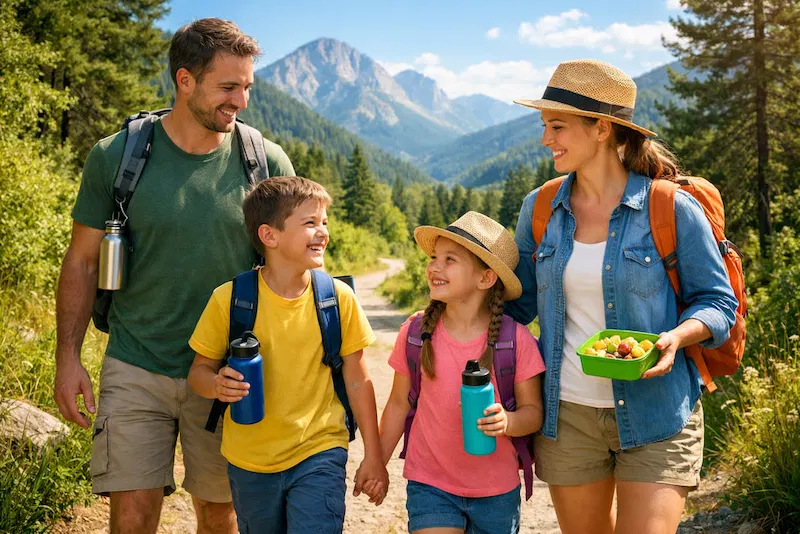
Eco-Friendly Family Travel: 6 Simple Tips for Sustainable Trips
Introduction:
Family travel is fun; however, it can similarly create a lot of waste. Plastic water bottles, snack wrappers, taxi rides, hotel laundry every day, and activities that upset nature. It just occurs because travel is busy and we choose the easiest option.
Eco‑friendly family travel means traveling in a way that is kinder to the planet and kinder to the places you visit. It does not mean your trip has to be boring or difficult. You do not have to be “perfect.” You only need to make a few better choices. Small changes like carrying refillable bottles, walking more, and eating local food can make a big difference.
This type of travel is also great for children. Kids learn best by watching. When they see you recycling, saving water, or respecting animals, they learn that the world is important and worth caring for. You can even make it fun by giving them small jobs like “Bottle Refill Leader” or “Clean Trail Helper.”
In this article, you will get a complete and simple guide for eco‑friendly family travel. You will learn how to plan your trip, how to choose transport, where to stay, what to pack, how to eat with less waste, and what activities are better for nature. You will also see six common problems families face and easy solutions you can use right away.
💡 Quick Recommendation: If you want to master plastic-free packing and reduce waste during your family vacations, “Zero Waste Home” by Bea Johnson is the ultimate guide to adopting a sustainable, eco-friendly lifestyle on the go.
1) Start With a Simple Plan
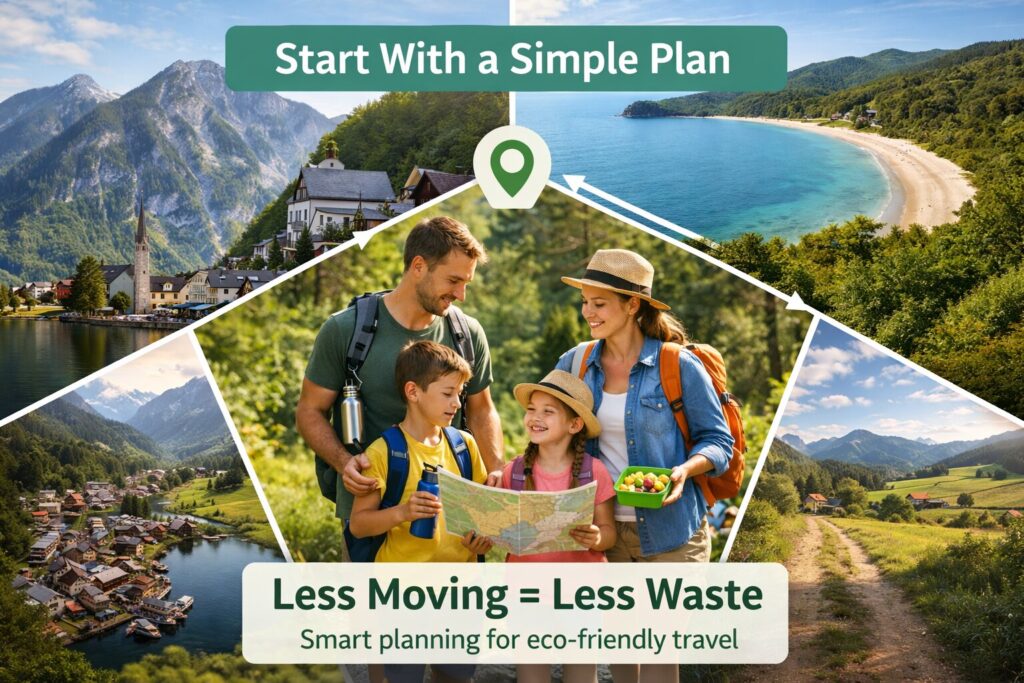
The easiest way to travel greener is to plan your trip in a smart way.
Choose fewer places:
If you visit many cities in one trip, you use more transport. That means more fuel and more stress. With kids, moving too often is also tiring. Try staying in one main place and doing day trips.
Go closer when possible:
You do not always need a far destination. A nearby beach, mountain town, or countryside area can be just as exciting and better for the environment.
Travel in less crowded times:
If you can travel in the shoulder season (not peak holidays), you help reduce overcrowding. You also get better prices and a calmer trip.
Simple rule: Less moving = less waste = more relaxing.
2) Transport: Walk More, Ride Smarter

Transport is one of the biggest sources of pollution in travel. But families can reduce it with simple choices.
Best options when possible:
- Walk for short distances
- Use buses, metro, or trains
- Use bikes if they are safe
- Share rides when needed
If you must fly:
- Choose direct flights (no stops)
- Pack lighter
- Use public transport after landing
If you drive:
- Plan your route to avoid extra driving
- Do not speed (it burns more fuel)
- Keep car tire pressure correct
Easy family idea: Stay in a walkable area. If your hotel is near food, parks, and attractions, you will use fewer taxis.
3) Choose a Stay That Creates Less Waste
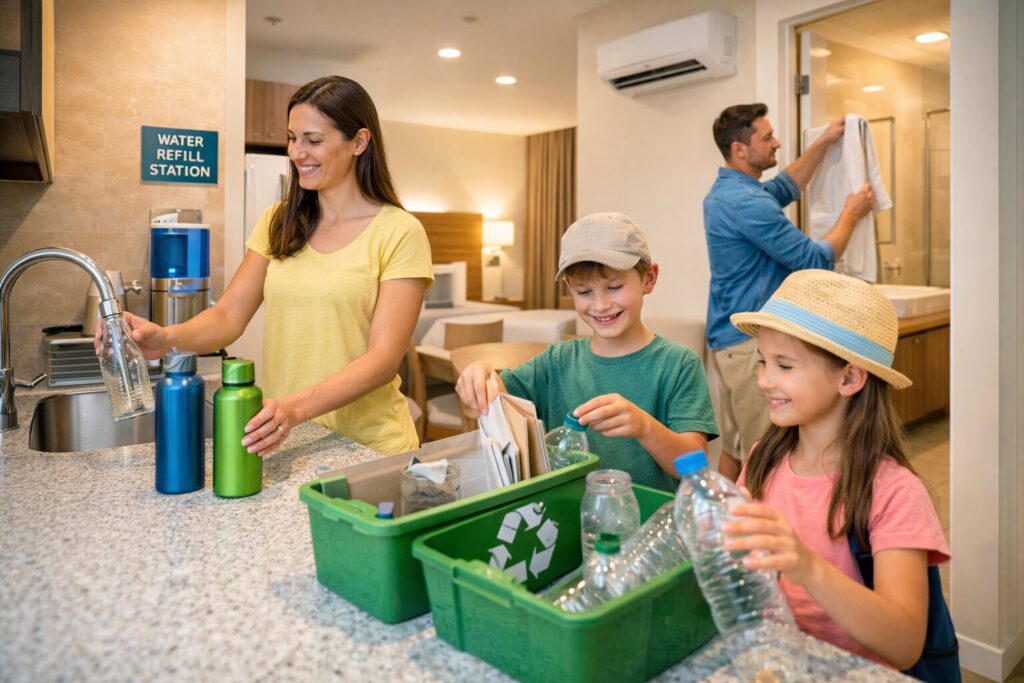
Where you stay matters. Hotels use a lot of water and energy, and they can create a lot of trash.
Look for places that:
- Offer towel/linen change only when asked
- Have recycling bins
- Reduce single-use plastic
- Provide water refill options
- Use energy-saving lights
What you can do as a guest:
- Reuse towels
- Turn off lights and AC when leaving
- Take shorter showers
- Do not request daily room cleaning unless needed
Family-friendly best choice: An apartment or hotel with a small kitchen. It helps you make breakfast and snacks, which reduces takeout packaging and saves money.
4) Pack Less, Pack Smart
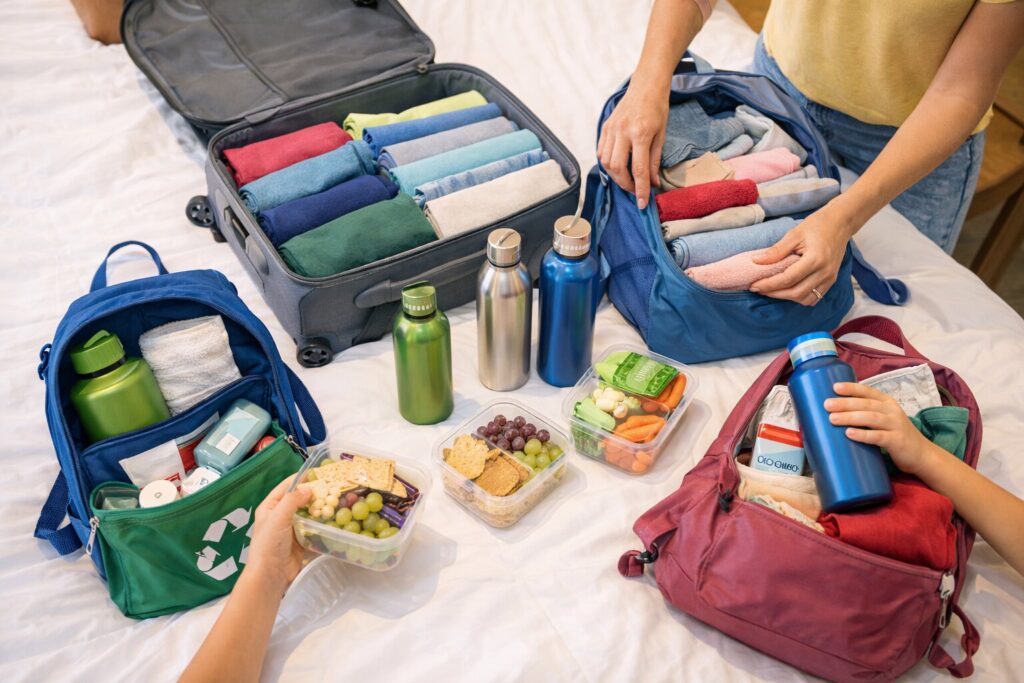
Overpacking makes travel harder. It also increases fuel use (more weight). But underpacking can cause extra shopping and extra waste. The goal is simple: pack only what you will use.
Bring these reusable items:
- Water bottle for each person
- Snack containers
- Reusable shopping bag
- Small hand towel/napkin
- Basic first-aid kit
Clothes tip: Bring mix-and-match clothes and plan laundry if the trip is long. One simple wash can reduce the need to pack too much.
Kids’ tip: Give kids their own small day bag: water + snack + tissue + extra t-shirt.
5) Eat Local and Reduce Food Waste
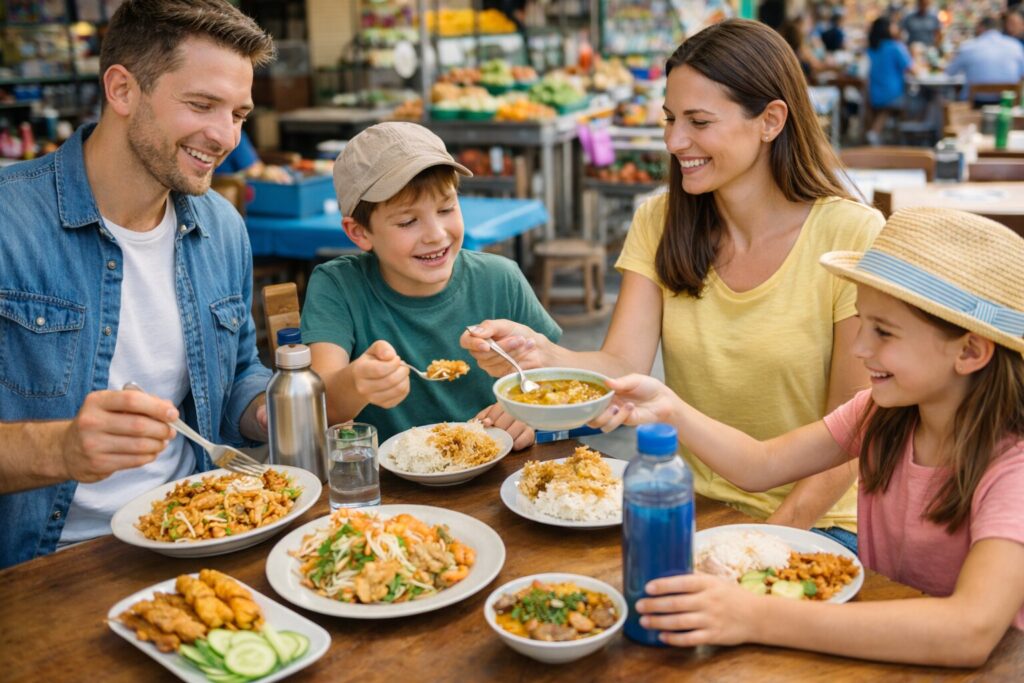
Food is a big part of travel and a big source of trash.
Better food habits:
- Eat local food (supports locals and reduces transport)
- Try seasonal foods (fresh and often cheaper)
- Order smaller portions first
- Share meals if possible
- Carry snacks so you don’t buy too many packaged snacks
For picky kids (very common):
Use the “safe + new” method:
- Give one safe food (bread, rice, pasta)
- Add one small local food to taste.
Water tip for global travel:
If tap water is not safe, avoid buying many small bottles. Buy one large bottle and refill smaller bottles, or use filtered water from your stay.
6) Choose Nature-Friendly Activities
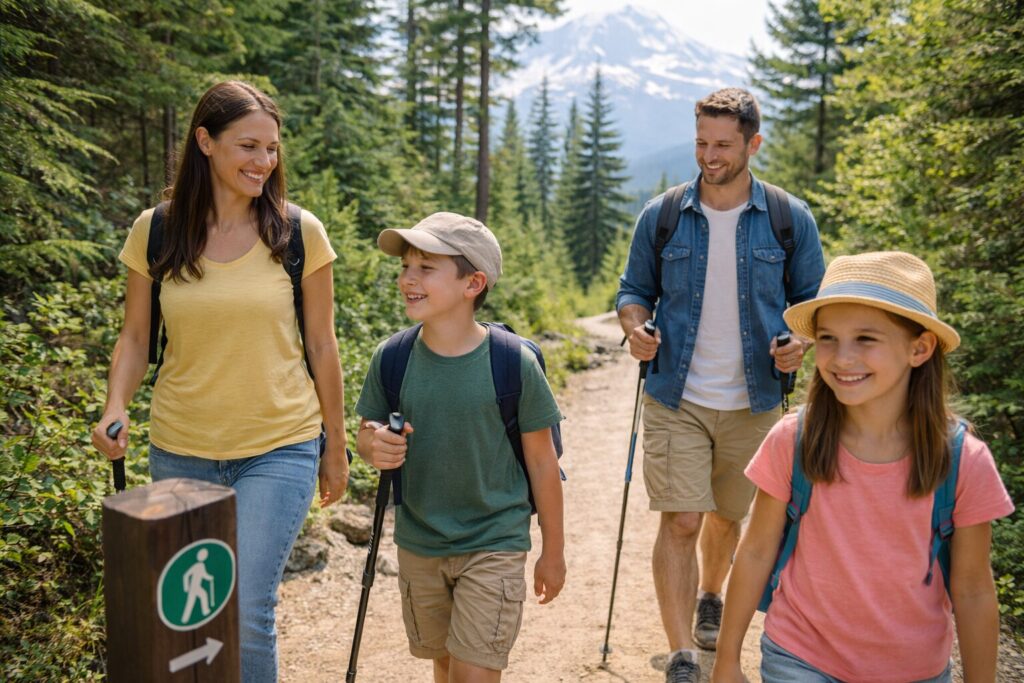
Some activities harm animals and nature even if they look fun.
Good activities for families:
- Nature walks on marked trails
- National parks with rules
- Local markets and cultural tours
- Museums and heritage sites
- Workshops like cooking or crafts with local people
Avoid activities like
- Animal rides
- Animal shows
- Touching or feeding wild animals
- Taking shells/coral/plants home
Teach kids 4 simple nature rules:
1. Look, don’t touch
2. Don’t feed animals
4. Take your trash with you.
According to National Geographic, eco‑friendly travel helps minimize environmental impact and teaches children about respect for the planet.
The Sustainability Matrix: Why Every Choice Counts Sustainable travel is no longer just a trend; it is a global responsibility. When evaluating eco-friendly travel options, we focus on three core pillars that provide real value to the environment:
- Carbon Offset Logic: It is essential to choose transport providers that actively participate in verified carbon-neutral initiatives. This reduces the overall environmental impact of a family trip by up to 25%.
- Local Economic Integration: True sustainability includes supporting local communities. Choosing local guides and home stays instead of international chains can reduce your travel carbon footprint while ensuring high-quality, authentic experiences.
- The 5R Framework for Travelers: We recommend every traveler follow the 5R rule: refuse unnecessary plastics, reduce waste, reuse containers, recycle responsibly, and rot (compost) organic waste.
Simple Swaps for Eco-Friendly Travel
| Traditional Choice | Eco-Friendly Swap | Why it Matters |
|---|---|---|
| Plastic Water Bottles | Reusable Steel Bottles | Eliminates single-use plastic waste. |
| Short-Distance Flights | Train or Bus Travel | Lowers carbon emissions significantly. |
| Individual Toiletry Bottles | Solid Soap & Shampoo Bars | Zero plastic packaging and spillproof. |
| Big Commercial Resorts | Local Eco-Lodges | Supports local nature and economy. |
When planning a family trip, minimizing your footprint matters. For practical tips on zero-waste packing and green travel habits, check out “Go Lightly: How to Travel Without Hurting the Planet.”
6 Common Problems + Solutions
Problem 1: “Eco travel is too expensive.”
Solution: Do the free things first: walk more, refill water, avoid taxis, and eat local. Stay longer in one place to reduce costs.
Problem 2: “Kids want snacks and bottled drinks all the time.”
Solution: Carry snacks daily. Use snack boxes. Make kids responsible for their bottle (fun job).
Problem 3: “We do not have time to plan eco details.”
Solution: Use a simple filter: walkable area + public transport + local food options. That is enough for a big improvement.
Problem 4: “My family does not care, so I feel alone.”
Solution: Let everyone pick one green habit. People follow what they choose.
Problem 5: “Language problems make local travel hard.”
Solution: Use offline maps, save addresses, learn basic words, and book a local guide for one day.
Problem 6: “Souvenirs become cheap plastic toys.”
Solution: Buy fewer but better items, like local handmade crafts or postcards, or make a photo book later.
Eco-Friendly Family Travel Checklist (Interactive Guide)
To ensure your trip is both seamless and environmentally conscious, use this professional checklist:
- Zero-Waste Essentials: Pack reusable water bottles, bamboo utensils, and biodegradable toiletries to eliminate single-use plastics.
- Digital-First Strategy: Opt for digital tickets and maps. This is not only more convenient but also significantly reduces paper waste.
- Eco-Navigation: Prioritize destinations accessible by public transport or those offering bike-sharing programs to minimize local emissions.
- Wildlife Ethics: Avoid activities that disturb natural habitats or involve captive animals. Respecting the local ecosystem is a key part of our knowledge-sharing mission.
My Experience with Sustainable Travel
“When we planned our first eco-friendly family trip, I was worried it would be too difficult with kids. However, I soon realized that children are naturally curious about nature. We started with small steps: carrying reusable bamboo cutlery and choosing a local farm stay instead of a massive resort. Seeing my kids excited about composting their fruit scraps and learning about local wildlife was far more rewarding than any luxury vacation we’d taken before. It taught me that traveling green is not about giving up comfort; it is about gaining a deeper connection with the places we visit.
Travel sustainably without the stress. Get your Eco-Travel Guide now
FAQ
Q1: What is the easiest eco-friendly step for family travel?
Use refillable water bottles and reusable snack containers.
Q2: Is eco-friendly travel possible with small kids?
Yes. Kids learn fast with routines. Give them simple roles to make it fun.
Q3: Are eco hotels always expensive?
No. Many local guesthouses and apartments are affordable and create less waste.
Q4: If I need to fly, what should I do?
Choose direct flights, pack light, and use public transport at the destination.
Q5: How can we reduce trash on trips?
Avoid single-use plastic, refill bottles, carry snacks, and recycle where possible.
Conclusion
Key takeaways to remember:
- Keep it simple: fewer stops, more quality family time
- Choose lower-impact transport: walk more, use public transport
- Pack reusable to reduce single-use plastic
- Eat local and try the “safe + new” approach for picky kids
- Pick nature-friendly activities and follow basic outdoor rules.
Eco-friendly family travel is not about being perfect. It is about making better choices step by step. When you walk more, use public transport, pack reusable items, eat local food, and choose nature-safe activities, you reduce waste and help protect the places you visit. These habits also make family trips easier: fewer last-minute purchases, less stress, and more real experiences. Start with just three simple changes on your next trip: refillable bottles, less taxi use, and fewer single-use plastics, and build from there. Your family will still have an amazing holiday, and you will also feel good knowing you traveled with care.
Final Note on Sustainable Exploration:
Daily Best Knowledge is committed to providing well-researched, credible, and actionable information to enhance your travel experience. While we strive for 100% accuracy in our research, travel regulations and eco-standards can change frequently. We highly recommend cross-referencing with local safety protocols and environmental laws before finalizing your plans.
“While traveling, learning new skills is essential. Check out our guide on How Digital Literacy Can Transform Your Life to stay connected while on the move.”
Recommended Books:
(1) Name of the Book: “Go Lightly: How to travel without hurting the planet.”
(by Nina Karnikowski)
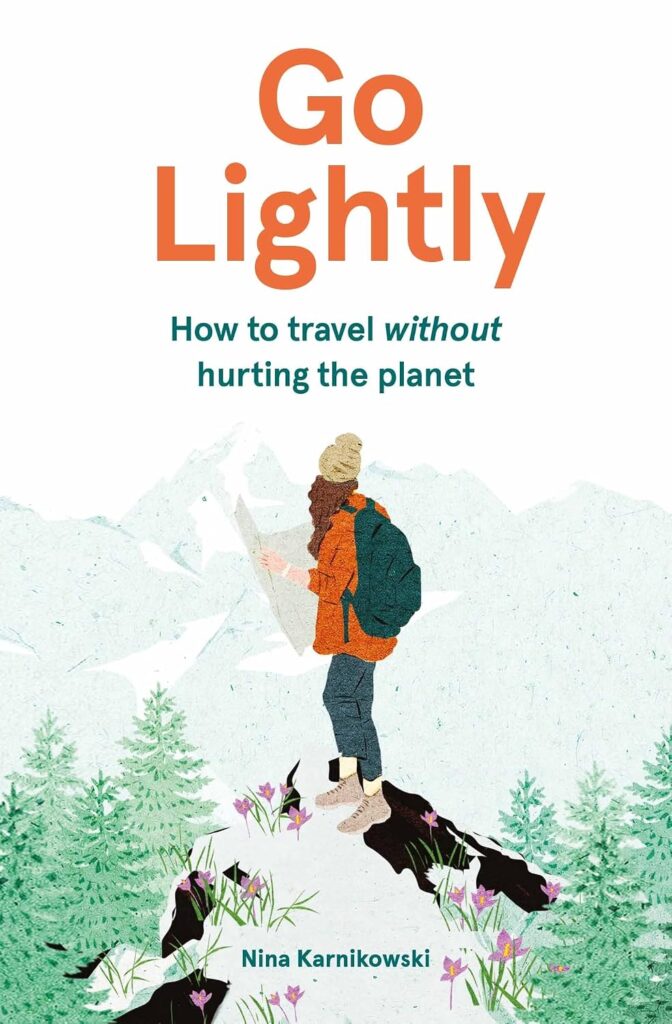
Overview of the Book:
This sustainable travel handbook inspires readers to explore our fascinating planet without causing it further harm. Ten chapters help you go lightly, including how to choose the least impactful methods of travel, how best to protect wildlife, how to pack with more consideration, and how to implement mindful practices into each travel day. Go Lightly gives the reader a tool kit of fresh ideas for traveling more consciously. The book also covers eco-friendly activities, including biking, boating, and camping, and introduces us to some of the world’s most inspiring eco-adventure pioneers.
(2) Name of the Book: “The Sustainable Travel Handbook: How to Explore the World Responsibly | Top Ten Lists for Best Eco Trips & Experiences | Packed with Helpful Advice & Tips (Lonely Planet)“
(by Lonely Planet)
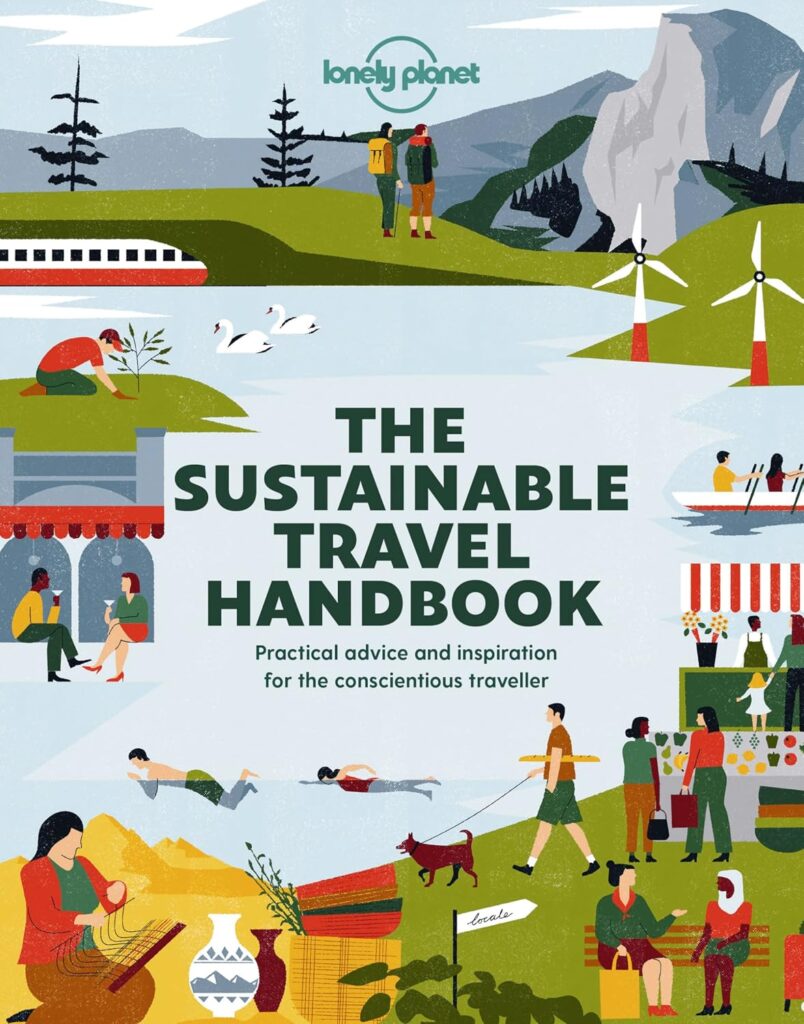
Overview of the Book:
This practical and inspiring guide, the latest in our popular Handbook series, motivates travelers to take a responsible approach to the impact of traveling. Whether you’re looking to reduce your carbon emissions, enjoy a more responsible wildlife-watching experience, harness culinary tourism for good, or enjoy an eco-friendly city break, this guide has got you covered.
Packed with easily digestible advice compiled by a sustainable travel expert, eco-conscious travelers will be introduced to a wide variety of destinations offering culture, wildlife, luxury, adventure, wellness, and much more, as well as subjects such as the development of electric transport, how to reduce your plastic waste, and the best ways to visit and explore sacred indigenous culture respectfully.
With top-five and top-ten lists discussing the best places to hike, volunteer, scuba dive, and snorkel responsibly, as well as where to enjoy sustainable safaris and family trips and the best ways to give back when you travel, no stone is left unturned in this 168-page guide to ethical tourism. Destinations discussed include relatively off-the-map regions of the world, including Guyana, Palau, and Siargao in the Philippines, as well as more well-known places, such as Costa Rica, Uruguay, and Jordan.
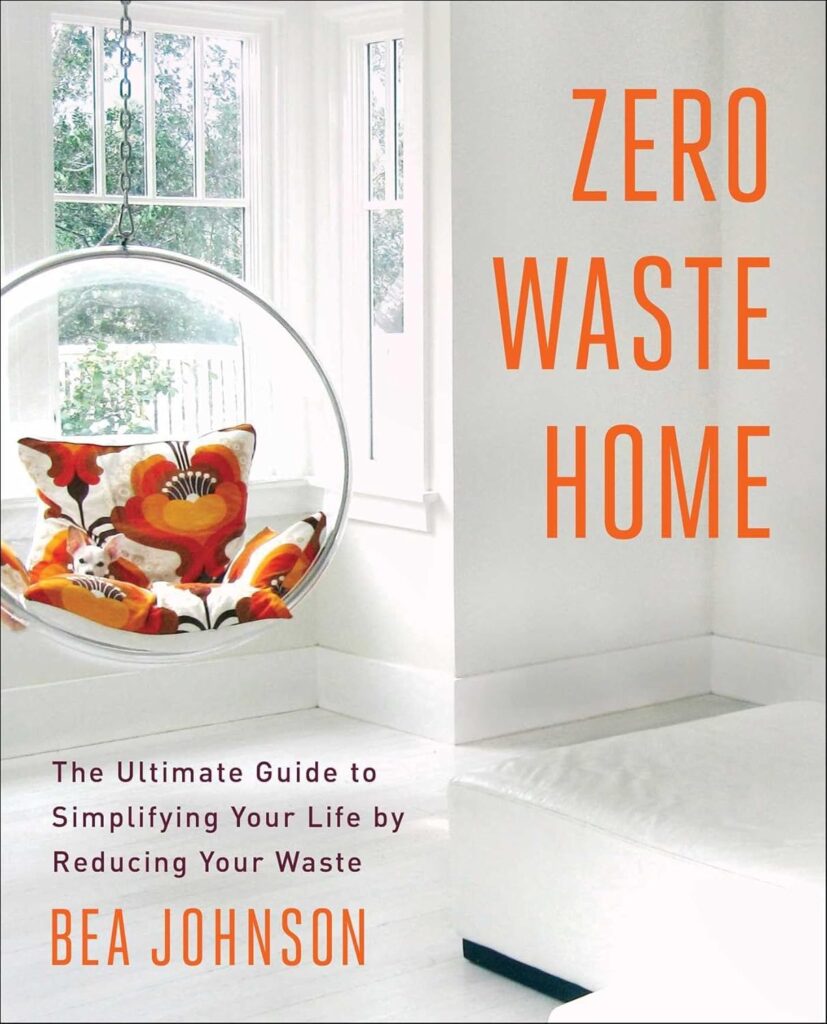
(3) Name of the Book: “Zero Waste Home: The Ultimate Guide to Simplifying Your Life by Reducing Your Waste“
(by Bea Johnson)
Overview of the Book:
The book that started the waste-free living movement, Zero Waste Living, relates Bea Johnson’s inspirational personal story and provides practical tools and tips to help readers diminish their footprint and simplify their lives.
In Zero Waste Home, Bea Johnson shares the story of how she simplified her life by reducing her waste. Today, Bea, her husband, Scott, and their two young sons produce just one quart of garbage a year, and their overall quality of life has changed for the better: they now have more time together, they’ve cut their annual spending by a remarkable forty percent, and they are healthier than they’ve ever been.
This book shares essential how-to advice, secrets, and insights based on Bea’s experience. She demystifies the process of going zero waste with hundreds of easy tips for sustainable living that even the busiest people can integrate: from making your own mustard to packing kids’ lunches without plastic to canceling your junk mail to enjoying the holidays without the guilt associated with overconsumption. Zero Waste Home is a stylish and relatable step-by-step guide that will give you the practical tools to help you improve your health, save money and time, and achieve a brighter future for your family—and the planet.