
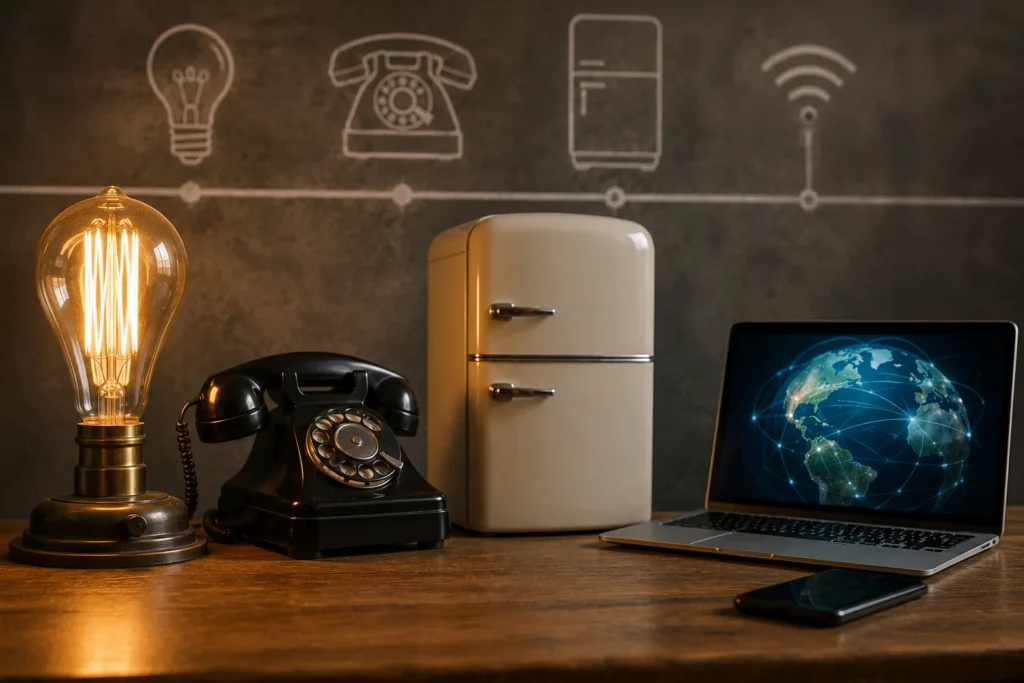
Inventions That Changed the World: The Light Bulb and Beyond
Introduction
Human history is shaped by brilliant minds, breakthroughs, and remarkable inventions that changed the world forever.
Throughout history, human civilization has progressed because of groundbreaking inventions that solved everyday problems and opened the door to new possibilities. From simple tools used by ancient societies to advanced technologies that power modern life, inventions have continuously shaped the way people live, work, communicate, and travel. Some innovations were created to make tasks easier, while others completely transformed entire industries and changed the course of history.
Today, it is difficult to imagine life without electricity, communication devices, or the internet. However, many of these conveniences did not exist a few centuries ago. Behind every major invention lies a story of experimentation, failure, persistence, and eventual success. Inventors often spent years overcoming technical challenges before achieving a breakthrough that would benefit millions of people.
Among the countless inventions that have influenced society, a few stand out because of their lasting impact. One of the most important is the light bulb. Before electric lighting became widely available, people relied on candles, oil lamps, and gas lights to illuminate their homes and workplaces. These methods were often expensive, inefficient, and potentially dangerous. The invention of the practical electric light bulb revolutionized daily life by extending productive hours beyond sunset and making indoor spaces safer and more comfortable.
This article explores the history of these groundbreaking inventions, the challenges faced during their development, and why they remain among the most influential innovations that have shaped the course of human history.
💡 Quick Recommendation: If you want to read about the fascinating history of the key innovations that shaped our modern world, “How We Got to Now: Six Innovations That Made the Modern World” is the absolute best choice.
Section 1: The Light Bulb – Bringing Light to the Modern World
Life Before Electric Light:
Before the invention of the electric light bulb, daily life was largely controlled by the rising and setting of the sun. This period followed the era of the greatest inventions of the Industrial Revolution, a time when human productivity began to accelerate rapidly. Once darkness fell, people depended on candles, kerosene lamps, and gas-powered lighting. These sources produced limited light, required constant maintenance, and posed significant fire hazards. Businesses often had to close early, students struggled to study at night, and many activities became difficult after sunset.
The Breakthrough and Impact:
Inventors throughout the nineteenth century recognized the need for a safer and more reliable lighting solution. Numerous scientists experimented with electric lighting, but early designs were impractical because they consumed too much power, burned out quickly, or were too expensive for widespread use. The challenge was to create a bulb that could provide bright, long-lasting light while remaining affordable for ordinary households.
The breakthrough came when inventors developed improved incandescent bulbs that used a durable filament enclosed within a vacuum-sealed glass bulb. This design significantly increased the lifespan of the light source and made electric lighting practical for homes and businesses. The success of the light bulb was not the result of a single experiment but rather years of testing, refinement, and innovation.
The impact was immediate and far-reaching. Homes became brighter and safer, factories could operate for longer hours, and cities began to transform with illuminated streets and public spaces. People gained greater flexibility in how they spent their time, whether working, studying, or enjoying leisure activities after dark.
Even today, modern lighting technologies such as LEDs build upon the foundation established by the original electric light bulb. Its invention marked the beginning of a new era, proving how a single innovation can dramatically improve productivity, safety, and quality of life for generations.
Proving how a single innovation can dramatically improve productivity, safety, and quality of life for generations. For a comprehensive history and timeline of the light bulb, you can visit the U.S. Department of Energy.
When we look back at the historical era, we find several milestone inventions that changed the world by transforming manual labor into automated production.
Section 2: The Telephone – Revolutionizing Global Communication
Overcoming Communication Barriers:
Before the invention of the telephone, long-distance communication was slow and often unreliable. People relied on handwritten letters, messengers, or telegraph systems to exchange information. While these methods were useful for their time, they could not provide instant, two-way communication. Important messages often took days, weeks, or even months to reach their destination, depending on the distance involved.
As societies became more connected through trade and industry during the nineteenth century, the need for faster communication grew significantly. Businesses wanted to coordinate operations more efficiently, governments needed better ways to share information, and families sought quicker methods to stay in touch with loved ones living far away. This growing demand created the perfect opportunity for a communication breakthrough.
Reshaping Business and Relationships:
The invention of the telephone transformed the way people communicated. For the first time in history, individuals could speak directly with one another across long distances without waiting for written correspondence. Voices could travel through electrical signals and be heard almost instantly, making communication faster, more personal, and more effective than ever before.
Early telephone systems were limited in reach and available primarily in urban areas. However, as telephone networks expanded, more homes, businesses, and public institutions gained access to this revolutionary technology. Telephone operators connected calls manually, creating one of the earliest large-scale communication networks in the world. Over time, technological improvements made telephone services more reliable, affordable, and accessible to the general public.
The impact on business was particularly significant. Companies could coordinate activities between offices, suppliers, and customers in real time. Decisions that once required days of correspondence could now be made within minutes. This increased efficiency helped businesses grow faster and contributed to the expansion of national and international markets.
The telephone also strengthened personal relationships by reducing the barriers created by distance. Families could maintain closer contact, friends could communicate more frequently, and emergency situations could be addressed much more quickly. During times of crisis, immediate communication often proved invaluable for organizing assistance and sharing critical information.
As technology advanced throughout the twentieth century, telephones evolved from simple wired devices into sophisticated communication tools. The development of mobile phones and smartphones expanded the original concept even further, allowing people to communicate from virtually anywhere in the world. Modern devices now support voice calls, video conversations, messaging, and internet connectivity, all built upon the foundation established by the original telephone.
Today, global communication happens at a speed that earlier generations could scarcely imagine. Whether conducting international business meetings, connecting with family across continents, or accessing information instantly, people continue to benefit from the communication revolution that began with the telephone. Its invention not only changed how messages were delivered but also reshaped human relationships, commerce, and global connectivity, making the world more interconnected than ever before. For a deeper dive into the history of this invention, you can visit the Library of Congress.
Section 3: The Refrigerator – Transforming Food, Health, and Daily Life
Preserving Food in the Past:
Before the invention of the refrigerator, keeping food fresh was one of the biggest challenges in everyday life. Families depended on salting, drying, smoking, and pickling to preserve meat, fish, and vegetables. In cooler climates, natural ice harvested during winter was stored in insulated buildings called ice houses. Smaller household “iceboxes” used blocks of ice to keep food cool for a limited time, but they required frequent ice deliveries and could not maintain a consistently low temperature.
These methods were inconvenient and often unreliable. Food spoiled quickly in warm weather, and contaminated food could spread disease. Milk, meat, and leftovers were especially risky, leading to frequent cases of food poisoning and gastrointestinal illness. For many households, daily shopping was necessary because food could not be stored safely for long periods.
Revolutionizing Health and Nutrition:
The development of the electric refrigerator in the early twentieth century changed this reality completely. Unlike iceboxes, electric fridges used mechanical refrigeration systems to remove heat and maintain a stable cold temperature around the clock. Early models were expensive, but advances in technology and mass production gradually made them affordable for ordinary families.
The shift from iceboxes to electric refrigerators brought major practical benefits. Households no longer needed regular ice deliveries, and food could be stored safely for days or even weeks. Refrigerators reduced waste, saved time, and made meal planning much easier. People could buy groceries in larger quantities, keep leftovers safely, and enjoy a wider variety of foods throughout the year.
The impact on human health was enormous. Cold storage slowed the growth of harmful bacteria, greatly reducing the risk of foodborne illnesses. Safer milk storage helped lower rates of disease, especially among children. Meat, fish, and dairy products could be kept at safer temperatures, improving overall nutrition and public health. Refrigeration also supported modern food safety systems in restaurants, supermarkets, and hospitals.
Dietary habits changed dramatically as well. Fresh fruits and vegetables could be transported over long distances and stored for longer periods, giving people access to more diverse and nutritious foods year-round. Refrigeration encouraged the growth of supermarkets and modern food distribution networks, making a wider range of products available to consumers. Frozen foods and chilled beverages became everyday conveniences rather than luxuries.
The refrigerator also reshaped domestic life and labor. Preparing meals became less time-consuming because ingredients could be stored in advance. Families no longer had to preserve large amounts of food manually or shop every day. This convenience contributed to broader social changes, including greater flexibility in work and household routines.
Over time, refrigerators continued to improve with better insulation, automatic defrosting, energy-efficient compressors, and precise temperature controls. Today’s models are quieter, safer, and more environmentally conscious than earlier versions, but they still serve the same essential purpose: keeping food fresh and safe.
The refrigerator may seem ordinary now, but its invention fundamentally changed human life. By improving food preservation, reducing disease, and expanding access to nutritious foods, it became one of the most important household technologies in modern history. To learn more, you can visit Britannica.
To dive even deeper into the unexpected stories behind everyday breakthroughs, you can check out the book “100 Inventions That Changed the World.”
Section 4: The Internet—Redefining How We Learn and Work
Accessing Information in the Digital Age:
Few inventions have transformed modern life as dramatically as the internet. Before its widespread adoption, accessing information often required visits to libraries, searching through books, consulting experts, or waiting for printed materials to arrive by mail. Communication was slower, collaboration across long distances was difficult, and many educational and professional opportunities were limited by geography.
The internet changed all of that by creating a global network that allows people to access information and communicate almost instantly. What began as a system for connecting computers eventually evolved into one of the most influential technologies in human history. Today, billions of people use the internet daily for learning, working, shopping, entertainment, and social interaction.
One of the most significant impacts of the internet has been on education. Students no longer rely solely on textbooks and classroom instruction to gain knowledge. Online resources provide access to articles, research papers, video tutorials, interactive courses, and educational platforms covering virtually every subject imaginable. A person with an internet connection can learn a new language, study coding, explore history, or develop professional skills from anywhere in the world.
The internet has also made education more accessible. Online learning platforms allow students to take courses from leading institutions without relocating or attending classes in person. This flexibility has opened educational opportunities for people who may not have had access to traditional learning environments due to financial, geographic, or personal constraints.
From the printing press to modern digital networks, these technological leaps are classic examples of inventions that changed the world and connected humanity.
Transforming the Modern Workplace:

The workplace has experienced an equally profound transformation. Before the internet, business communication often depended on postal mail, fax machines, and face-to-face meetings. Sharing documents between offices could take days, and international collaboration was often expensive and time-consuming. Today, employees can communicate instantly through email, messaging platforms, video conferencing, and cloud-based collaboration tools.
Remote work has become one of the most visible examples of the internet’s influence. Many professionals can now work from home, co-working spaces, or even while traveling. Teams located in different countries can collaborate on projects in real time, sharing files, ideas, and updates without being in the same physical location. This flexibility has changed how organizations operate and has created new opportunities for businesses and workers alike.
The internet has also fueled innovation and entrepreneurship. Small businesses can reach global audiences through websites and digital marketing, while freelancers can offer services to clients worldwide. Access to information, tools, and online marketplaces has lowered barriers to entry in many industries, allowing more people to start businesses and pursue independent careers.
Despite challenges such as misinformation, cybersecurity risks, and digital distractions, the benefits of the internet remain undeniable. It has made knowledge more accessible, communication more efficient, and work more flexible than ever before.
Today, the internet serves as the foundation of modern education, business, and communication. Its ability to connect people, ideas, and resources across the globe has fundamentally changed how we learn, work, and interact, making it one of the most impactful inventions of the modern era. To learn more, you can visit Britannica.
Want to keep this guide for later? You can download the PDF version here
Conclusion
The history of human progress is closely connected to the history of invention. Throughout the centuries, innovators have developed solutions to everyday challenges, creating technologies that transformed the way people live and interact with the world. The light bulb extended productive hours beyond sunset, making homes and workplaces safer and more efficient. The telephone revolutionized communication by allowing people to connect instantly across great distances. The refrigerator improved food safety, reduced waste, and expanded access to nutritious foods. Meanwhile, the internet created an unprecedented level of global connectivity, changing how people learn, work, communicate, and share information.
Although these inventions emerged in different eras and served different purposes, they share a common theme: improving human life. Each breakthrough solved important problems while creating new opportunities for growth, innovation, and progress. Today, many of these technologies are so deeply integrated into daily life that it is difficult to imagine a world without them.
As technology continues to evolve, future inventions will likely shape society in ways we cannot yet predict. However, the impact of these groundbreaking innovations serves as a reminder that a single idea, when developed successfully, can change the world for generations.
Frequently Asked Questions (FAQs)
1. Why is the light bulb considered one of the most important inventions?
The light bulb transformed daily life by providing reliable and safe artificial lighting. It allowed people to work, study, and perform activities after dark, increasing productivity and improving overall quality of life.
2. How did the telephone change global communication?
The telephone made it possible for people to communicate instantly over long distances. It reduced the need for lengthy written correspondence and helped businesses, governments, and families stay connected more efficiently.
3. What advantages did refrigerators have over traditional iceboxes?
Electric refrigerators maintained consistent cooling temperatures without requiring ice deliveries. They improved food preservation, reduced spoilage, enhanced food safety, and made grocery storage more convenient for households.
4. How has the internet changed education?
The internet provides access to vast amounts of information, online courses, research materials, and educational resources. It enables students to learn from virtually anywhere and supports lifelong learning opportunities.
5. Which of these inventions has had the greatest impact on society?
Each invention has made a unique contribution. The light bulb improved daily productivity, the telephone transformed communication, the refrigerator enhanced public health, and the internet revolutionized access to information. Their combined impact has significantly shaped modern civilization.
Recommended Books:

(1) Name of the Book: “How We Got to Now: Six Innovations That Made the Modern World” (by Steven Johnson)
Overview of the Book:
In this illustrated history, Steven Johnson explores the history of innovation over centuries, tracing facets of modern life (refrigeration, clocks, and eyeglass lenses, to name a few) from their creation by hobbyists, amateurs, and entrepreneurs to their unintended historical consequences. Filled with surprising stories of accidental genius and brilliant mistakes—from the French publisher who invented the phonograph before Edison but forgot to include playback to the Hollywood movie star who helped invent the technology behind Wi-Fi and Bluetooth—How We Got to Now investigates the secret history behind the everyday objects of contemporary life.
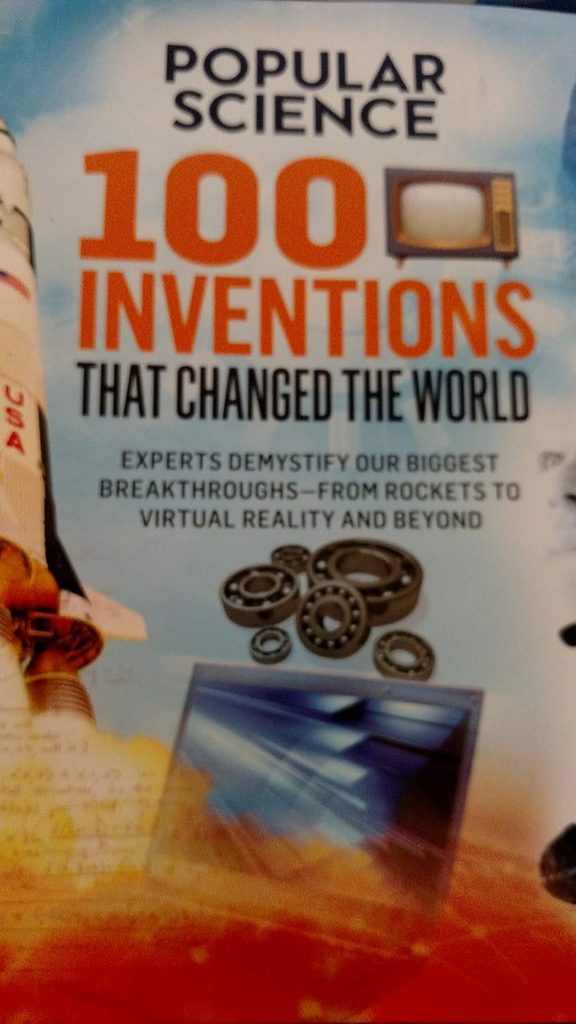
(2) Name of the Book: “100 Inventions That Changed the World” (Popular Science) by The Editors of Popular Science
Overview of the Book:
We take thousands of inventions for granted, using them daily and enjoying their benefits. But how much do we really know about their origins and development? This absorbing new book tells the stories behind the inventions that have changed the world.
(3) Name of the Book: “The Boy Who Harnessed the Wind, Young Reader’s Edition” by William Kamkwamba.

Overview of the Book:
When a terrible drought struck William Kamkwamba’s tiny village in Malawi, his family lost all of the season’s crops, leaving them with nothing to eat and nothing to sell. William began to explore science books in his village library, looking for a solution. There, he came up with the idea that would change his family’s life forever: he could build a windmill. Made out of scrap metal and old bicycle parts, William’s windmill brought electricity to his home and helped his family pump the water they needed to farm the land.