DAILY BEST KNOWLEDGE

Study Habits for Better Retention: How to Remember What You Study
Struggling to retain information? Learn how to remember what you study in only 15 minutes using science-backed active recall, spaced repetition, and focused Pomodoro sessions.
EDUCATION
Iftikhar Ishaque Memon
6/9/20268 min read
Introduction
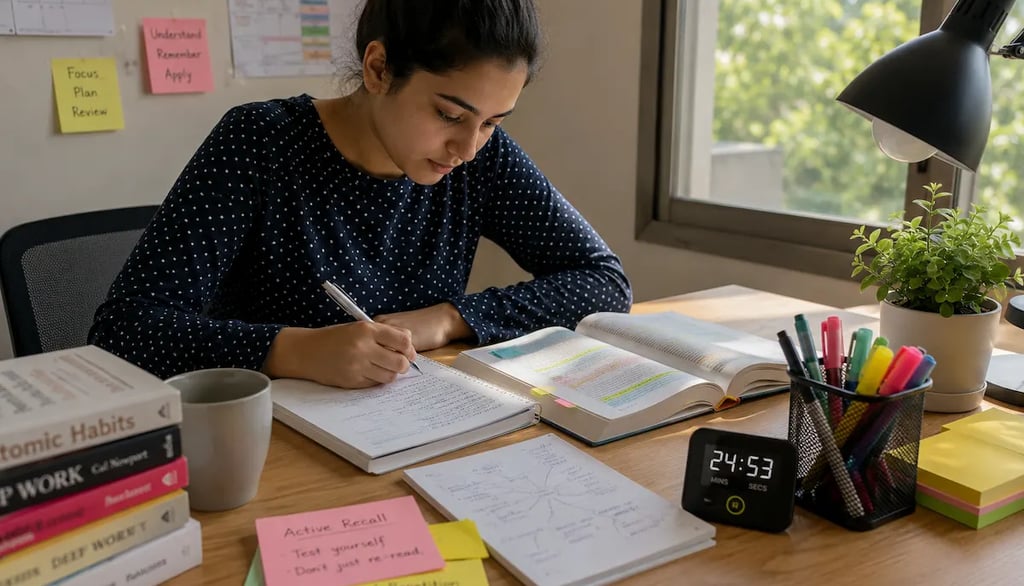
Effective study is not just about putting in hours; it is about how you study. Research shows active techniques like self-quizzing (active recall) and spaced repetition dramatically improve long-term memory compared to passive review. Your physical environment also matters: good lighting, comfortable seating, and minimal distractions help your brain focus. Time management techniques like the Pomodoro Technique, breaking work into focused 25-minute blocks with short breaks, can prevent burnout and make study sessions more productive. During my own blogging and study journey, I often felt that despite studying for hours, I would still forget everything. Do you face the same issue? In reality, most of us use the wrong study methods. Here we also include FAQs on common concerns like “How do I actually use spaced repetition?” or “Should I study with music?” and end with a concise conclusion summarizing key takeaways.
Active Recall: Test Yourself, Don’t Just Re-Read
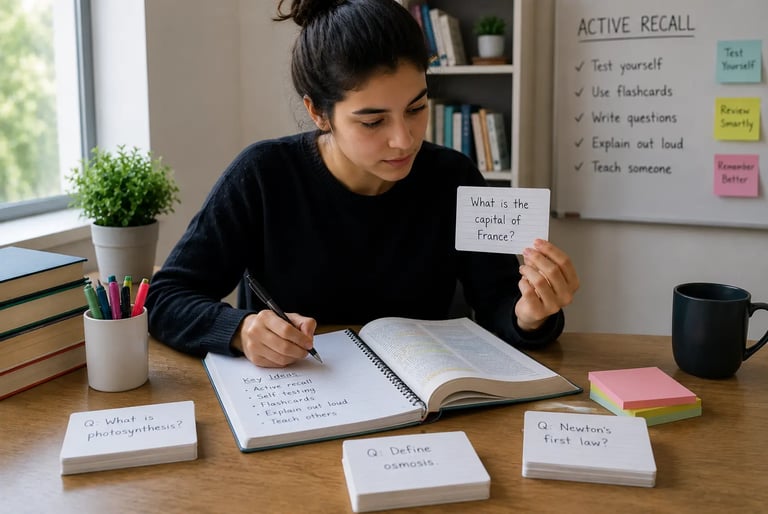
One of the most powerful ways to remember what you read is active recall; that means quizzing yourself on the material instead of just re-reading it. For example, after reading a chapter, you might close the book and try to write down the key ideas from memory or use flashcards to test yourself on important terms. This triggers the “testing effect”: retrieving information from memory makes it stick in long-term memory much better than simply looking at the material again. In other words, active recall forces your brain to pull knowledge out, strengthening your ability to retrieve it later.
As an education expert notes, “Study after study shows active recall is far more effective than passive review for long-term retention." In practice, active recall can be as simple as the following:
Covering your notes and explaining the concepts aloud from memory.
Using flashcards (digital apps like Anki/Quizlet or paper cards) – see the front (question) side and try to answer before flipping.
Writing your own exam questions and testing yourself.
Teaching the material to someone else (or a rubber duck!), which forces you to recall and explain it.
Even struggling to remember is good: if you cannot answer, the effort of trying helps you learn. In fact, even failed retrieval attempts strengthen memory more than not trying at all. After each self-test, check the answers and focus your next study on what you missed. Over time, this makes sure you actually know the material, not just feel like you do. Many students fall into the “illusion of mastery” by rereading; it feels productive but does not build memory.
Spaced Repetition: Review Over Time
While active recall helps you engage with material, spaced repetition (or spaced practice) schedules when to review it for best memory. Instead of cramming all at once, you review information at increasing intervals (for example: 1 day, 3 days, 1 week, etc. after first learning it). This method is based on the psychological spacing effect: we forget information over time, but each review strengthens the memory so the forgetting happens more slowly.
Using spaced repetition means planning short review sessions for topics days or weeks later. For instance, you might study vocabulary in a new language on Monday, briefly test yourself on it again on Tuesday and again the next week, each time ensuring you use active recall. This builds long-term retention. One study example: spreading five hours of study over two weeks produced more lasting learning than the same five hours crammed into one day. In short, regular short reviews save time in the long run and keep information in memory much longer than a single marathon session.
Practicing spaced repetition:
After a lecture or reading, make flashcards or a quick summary of key facts. Then schedule reviews: review each set of notes or cards the next day (Day 1), a few days later (Days 3 or 4), then a week later, and so on. Many apps (like Anki) automate this scheduling. A simple version is the Leitner system: sort flashcards into boxes by how well you know them, reviewing difficult ones more often and easy ones less often. As you get answers right repeatedly, the intervals lengthen. Combining this with active recall (self-testing during each review) “locks information into long-term memory."
Time Management & Pomodoro Technique
Effective study also means managing your time and focus. The Pomodoro Technique is a popular method: work in short, focused bursts (usually 25 minutes) followed by brief breaks (5 minutes), and after every 4 “pomodoros” take a longer break (15–30 minutes). Here’s how it works:
1. Choose a task (e.g., “read biology chapter” or “do math problems”).
2. Set a timer for 25 minutes and work only on that task, eliminating distractions.
3. When the timer rings, mark one pomodoro done and take a 5-minute break.
4. Repeat for 3 more sessions (with breaks). After 4, take a longer break (15–30 minutes).
This method improves focus and energy. The short deadlines make it easier to start (25 minutes feels doable), and knowing a break is coming helps you push through. It also prevents burnout: breaks give your brain rest, which prevents fatigue and keeps motivation high. You can adjust the lengths (some people find a 50 min focus/10 min break works better). The key idea is alternating focus with rest.
Building your day:
Combine Pomodoro blocks with your schedule. For example, dedicate one or two pomodoros to each subject or task, then review past material in a pomodoro.
The Pomodoro technique is effective because it teaches your brain to balance 'focus' and 'rest,' which significantly boosts productivity.
Weekly Study Schedule Plan
Beyond Pomodoro, other time-management tools help too: use a to-do list or planner to set goals, prioritize tasks, and track progress. For instance, apps like Todoist or even a simple calendar can block out study periods and breaks. The key is consistency; having a routine (e.g., same study spot and times each day) makes it easier to start and stick with your plan.
Ideal Study Environment
Your study space can make a surprising difference. Environmental factors like lighting, noise, and ergonomics affect how well you focus and remember.
Lighting: Natural light is best. Studies find students in sunlit rooms score higher (one study showed ~25% higher reading scores vs. dim light).
Natural or full-spectrum light keeps you alert. If natural light is limited, use bright cool-white lamps rather than dim or harsh fluorescent lighting.
Noise: Silence is ideal for complex learning; even low background chatter can hurt concentration. However, a bit of steady, non-distracting ambient sound (like soft instrumental music or white noise) can help some people relax when working on routine tasks. If noise distracts you, use noise-canceling headphones or pick a quiet room. Always silence phone notifications and close tabs/apps unrelated to studying digital distractions severely reduce focus.
Clutter and Organization: A tidy space minimizes cognitive overload. Messy desks can cause stress and distraction. Keep only what you need on your desk: books, notebooks, and pens. Store other items away. A clean, well-organized space lets your brain concentrate on studying, not on visual clutter.
Comfort and Ergonomics: Comfort matters. Use a supportive chair and a desk at the right height. Good posture (straight back, feet flat, screen at eye level) prevents fatigue and discomfort. When you’re comfortable, you can focus longer. Also, take care of basic needs: study in a moderate room temperature (around 21–23°C is ideal), and keep water/snacks handy to avoid unnecessary breaks.
For example, a clean desk with a lamp and few distractions helps your brain settle into “study mode.” Over time, your mind will associate that dedicated spot with focus. In short, design your study space like this: well-lit, quiet, comfortable, and uncluttered. If you feel more alert and less distracted in a library or café, use those; if your bedroom is cluttered and noisy, find or create a better corner in your home. Even small tweaks – adding a plant, improving lighting, or decluttering – can boost concentration.
A supportive study setup is not just about your desk; it is also about how you engage with your instructors and peers. Check out my article on Remote Learning & Communication Skills: A Guide for Students to learn how to bridge the gap in digital learning environments.
Comparison of Study Techniques
Use active recall and spaced repetition for most of your studying, especially for subjects that require remembering facts or concepts. Use Pomodoro or other scheduling tricks when you find your attention fading or when a task feels overwhelming. Always try to replace passive reading with testing (e.g., after reading notes, try to write down what you remember). And keep your notes and tasks organized from the start.
If you are interested in diving deeper into the science behind these methods, the official Pomodoro Technique website and The Learning Scientists guides are excellent resources. However, I highly recommend that you first try applying these techniques using the weekly study schedule I provided for at least one week, as practical application is the most effective way to learn.
Frequently Asked Questions
Q: What if I forget the material even after using active recall?
A: It’s normal to forget, especially early on. The goal of active recall is to identify what you don’t remember and focus on it. Don’t be discouraged – each failed attempt means your brain is working. Immediately check the correct answer, study it again, and then try to recall it later (this is spaced repetition). Over a few cycles, you’ll reinforce the memory.
Q: How soon should I review something?
A: A good rule is to do a quick review of new information within a day (1 day later), then again after a few days, and again about a week later. The first review can be light (just testing key ideas). If you know it well, increase the interval; if you struggle, shorten it.
Q: Can I study with music or in a coffee shop?
A: This depends on your preferences. If quiet distracts you, soft instrumental or ambient music might help (avoid lyrics that could pull attention away). However, studies suggest silence is better for learning tough material. Always silence your phone. Some people concentrate well in a mild background buzz (like a café hum), while others need near silence. Experiment to find what works for you, but limit disruptions in any case.
Q: How strict do I have to be with Pomodoro timing?
A: The 25/5 rule is just a guide. If a 25-minute focus seems too short or long, adjust it to your natural attention span (e.g., 50/10 or even 15/3). The important part is taking regular breaks. Also, if you get into a “flow” state (fully focused) and the timer rings, it’s okay to extend one session until you naturally need a break. The method’s purpose is consistency and preventing burnout, not to rigidly interrupt productive focus.
Q: What if I don’t have a perfect study space?
A: Do your best with what you have. Even small changes help: study near a window if possible, keep your desk tidy, use a lamp if overhead light is dim, or use headphones to cancel noise. If your usual space isn’t great, try studying at a library or a quieter room. The key is to minimize distractions (e.g., put your phone in another room) and create a routine so your brain gets used to “study time” wherever you are.
Q: Why not just highlight and re-read notes?
A: Highlighting and re-reading feels productive but mostly increases familiarity, not memory. You might feel confident knowing you’ve seen the material, but you may not be able to recall it later. Active recall and spacing actually build durable memory, whereas passive review often leads to easy forgetting. Use highlighting only as a first step (to identify important parts), then convert that information into a question or summary you can test yourself on.
Ready to master your studies? Click the button below to download my personalized Study Success Toolkit and begin your journey today.
Conclusion
Remembering what you read is a skill you can build, and I have found that consistency is the secret ingredient. Actively engaging with the material by testing myself has changed the way I approach my work, and I hope it does the same for you. I used to struggle with cramming, but shifting to spaced reviews and a focused study environment (bright light, minimal clutter) made a world of difference in my own productivity.
These habits are backed by science, but they become truly powerful when you make them your own. Even spending just a few minutes daily on active recall can make a significant impact. By thoughtfully combining active recall for deep learning, spaced repetition for long-term memory, and a supportive study setup with regular breaks, I am confident you will maximize what you retain from every study session.
© 2025. All rights reserved.
This platform delivers well-researched articles to empower your personal and professional life.